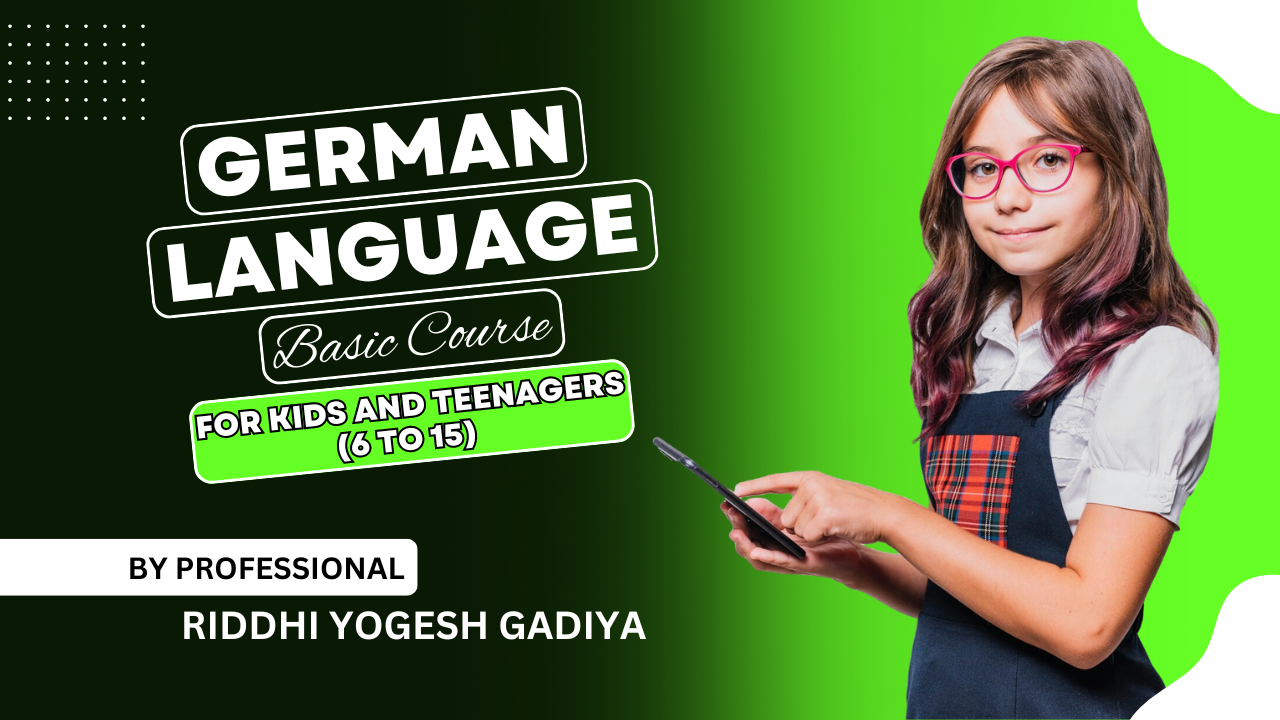

About This Course
The A1 German level, also known as the "Breakthrough" level, is the beginner level in the Common European Framework of Reference for Languages (CEFR). At this level, learners are able to understand and use familiar everyday expressions and very basic phrases aimed at the satisfaction of concrete needs.
They can introduce themselves and others, ask and answer questions about personal details such as where they live, people they know, and things they have. In terms of listening, A1 learners can understand isolated phrases and common expressions related to areas of most immediate relevance (e.g., very basic personal and family information, shopping, local geography, employment). They can also communicate in simple and routine tasks requiring a simple and direct exchange of information on familiar and routine matters. At the A1 level, learners can interact in a simple way provided the other person talks slowly and clearly and is prepared to help. This level is the foundation for further German language learning and proficiency.
Learning Objectives
In the A1 level of a German course, you will cover Netzwerk neu book , grammar topics that are essential for building a strong foundation in the language. Here are some of the key grammar topics typically covered at the A1 level:
At the A1 level in German, you will learn the basics of the language to help you communicate in simple everyday situations. Here are some key topics you will cover at the A1 level:
1. Greetings and Introductions: You will learn how to greet people, introduce yourself, and have basic conversations about your name, where you're from, and how you are.
2. Everyday Vocabulary: You will learn common vocabulary related to everyday life such as numbers, colors, days of the week, months, family members, food, and drinks.
3. Basic Grammar: You will learn basic grammar rules including present tense of regular verbs, personal pronouns, articles, and basic sentence structure.
4. Describing Things: You will learn how to describe things such as colors, sizes, and shapes.
5. Asking and Answering Questions: You will learn how to ask and answer simple questions about yourself, your interests, and your surroundings.
6. Shopping and Ordering: You will learn vocabulary and phrases related to shopping, ordering food in a restaurant, and asking for prices.
7. Giving and Following Directions: You will learn how to ask for and give simple directions, such as asking where something is located or how to get to a place.
These topics will provide you with a solid foundation in German and help you start communicating in the language. It's a great starting point for further language learning and building your proficiency in German.
Requirements
- Complete Arbeitsbuch , Solve Grammar worksheets , Solve Test for each Chapters